e/migrate times (performance)
live and online
https://www.livecamcroatia.com/hr/kamera/korcula-veliki-ravelin
An Australian artist of Croatian heritage who does not speak Croatian, Anita Bačić develops her artistic practice from the perspective of the diaspora. Her position between different languages, cultures, and geographies opens up a space for exploring migration, identity, belonging, and the ways in which individuals and communities connect with one another.
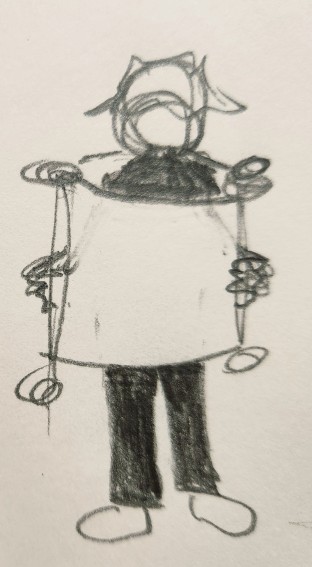
e/migrate times examines Australian migration narratives through visual material sourced from Australian archives. Archival images and promotional materials are presented in the form of a “town crier” or sandwich board advertiser, evoking historical modes of communicating information in public space.
The project traces materials ranging from emigration campaigns of the early twentieth century to promotional content produced in multiple languages for different European audiences during the 1960s. Through these materials, it becomes apparent how the criteria for “preferred” migrants, the language and messaging of immigration campaigns, and the very ways in which these messages are delivered to the public have evolved over time.
The project e/migrate times is an extension of Bačić’s Twitter (now X) bot @AustralianOld, launched in 2019, which randomly shared advertising and promotional posters from Australia’s National Archives. By transferring this principle from digital space into physical public space, the artist explores the relationship between automated online communication and human presence.
As an extension of the exhibition of the same name, presented simultaneously in the Wi-Fi Gallery of grey) (area in Korčula, Bačić presents selected images from e/migrate times and performs as a “human bot”. Every day at a specified time, she appears in physical space, presenting the images to a public webcam aimed at the entrance to the stairs of Korčula’s Old Town, while simultaneously interacting with the people around her.
The “human bot” replicates the mechanisms of an online bot—it appears regularly, at a specified time, within the open platform of a webcam—but instead of operating through an automated digital system, it functions through physical presence and direct encounter. The project thus raises questions about the migration of information, people, and images; the relationship between archives and the present; and the transformation of the ways in which we communicate, connect, and create a sense of belonging.
This project is part of siva) (zona’s programme line History of the Contemporary, which examines the contemporary through layers of historical experience and their enduring resonances in the present.
About author
Anita Bačić is an Australian artist who explores themes of migration, identity, and belonging, engaging with the human need to network, interact, and communicate—to connect and disconnect—with one another. She is fascinated by the construction of stories, images, and experiences, and by how we, as individuals, can actively contribute to and participate in these processes. Working across both old and new media, she creates immersive and participatory works that invite people to slow down, pay attention to everyday moments, and reconsider how they experience the world. Bačić completed a Master of Fine Arts (Media Arts) at the College of Fine Arts, UNSW, Sydney. She has exhibited at Bangkok Art & Culture Centre (TH), Centre Pompidou (FR), Videobrasil (BR), FILE (BR), Amber Platform (TR), and was recently an artist-in-residence at ACMI X-Lab in Melbourne, Australia. She has collaborated with Grey Area – Space for Contemporary and Media Art in Korčula, Croatia, since 2015, including Walk[in] Past (2018), a project focused on Blato on the island of Korčula.